Udaipur · Vision generated
Udaipur 2080
Udaipur 2080: The Venice of the East, Reborn as a Resilient Oasis.
Climate-resilient style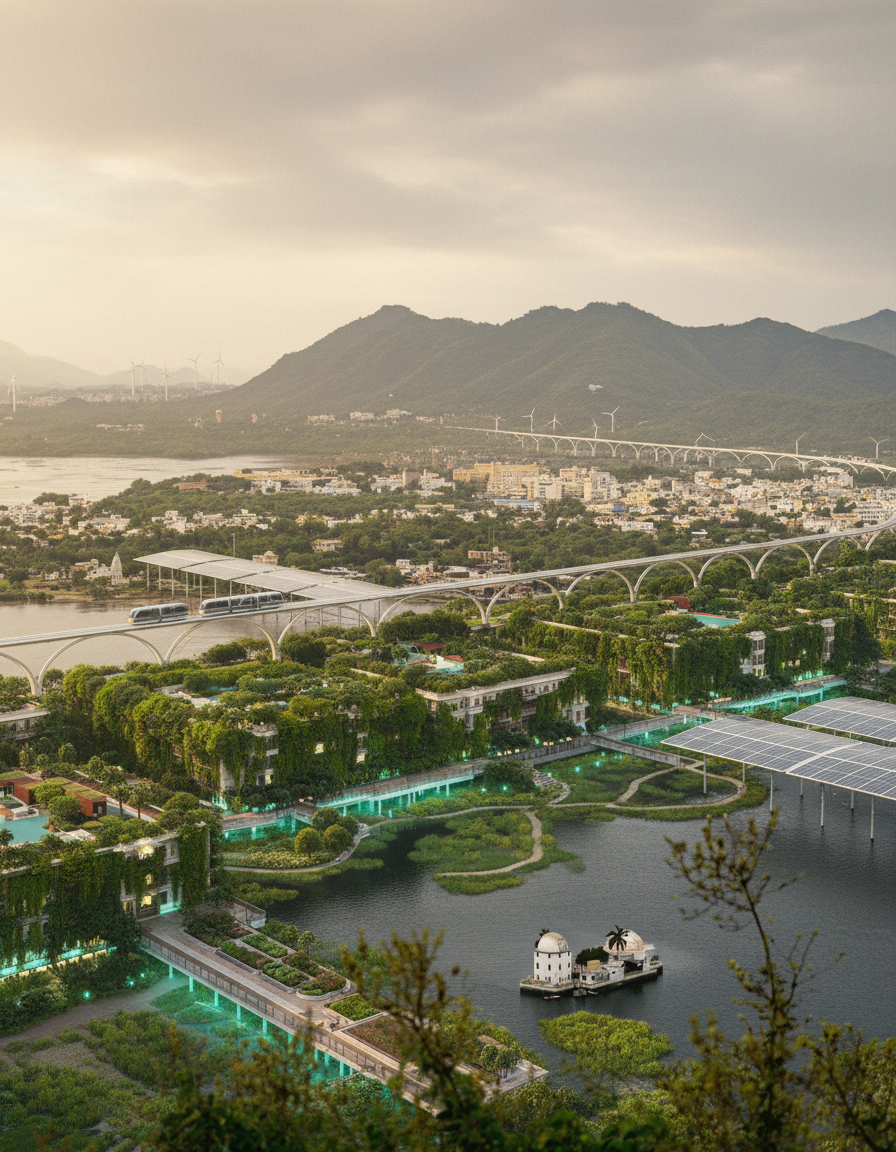 Reimagined
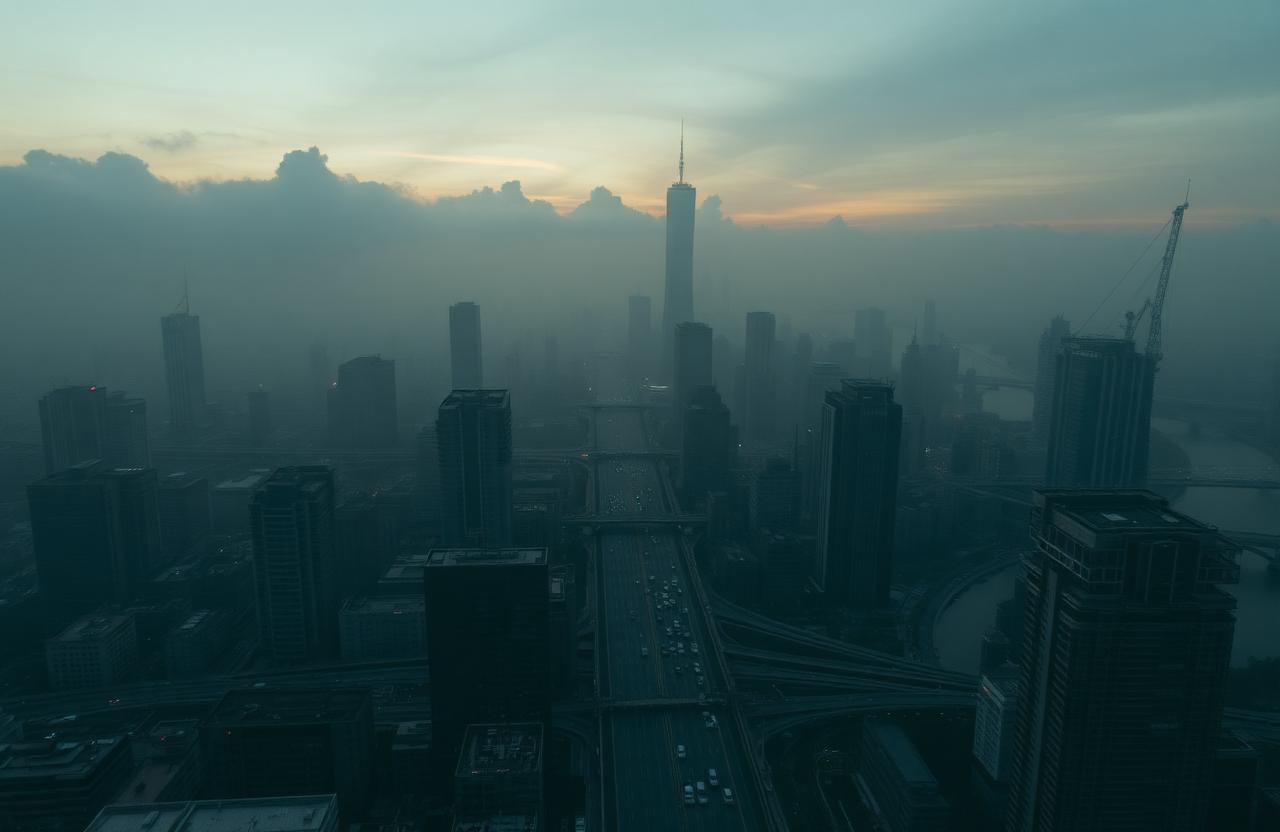 Today
TodayBy 2080, Udaipur transforms into a global exemplar of a climate-resilient eco-utopia. Through vertical forests embracing historic structures, a silent network of maglev and autonomous air-taxis, and widespread adoption of near-zero emission technologies, the city reclaims its natural heritage. Emphasis on flood absorption through revitalized lake systems, urban heat reduction via extensive green infrastructure, and storm resilience through integrated water management ensures equitable climate protection for all residents, while meticulously preserving its rich cultural tapestry through adaptive retrofits.
Projected impact
AI estimate, not a forecastPM2.5 Concentration
from 45µg/m³ today
Average annual PM2.5 (2020-2022) for Udaipur, target WHO guideline
Tree Cover
from 15% today
Estimate based on satellite imagery (2022), target includes vertical forests
Flood Absorbance
from 30% today
Estimate of natural surface water infiltration (2022), target includes green infrastructure
Public Transport Modal Share
from 25% today
Estimate based on city surveys (2022), target includes maglev and air-taxis
Traffic and Commute
Udaipur's narrow streets are often gridlocked with a mix of personal vehicles, auto-rickshaws, and buses, leading to long commute times and significant air pollution, particularly around major tourist attractions and markets.
→ A fully integrated, multi-modal transportation network dominates Udaipur. Maglev trains connect major hubs and surrounding areas, while a fleet of autonomous electric micro-taxis and air-taxis provide seamless last-mile connectivity. Pedestrian-priority zones and extensive cycling networks make active transport the preferred choice for short distances, drastically reducing reliance on private vehicles and eliminating traffic congestion.
Pollution and Air Quality
High levels of particulate matter (PM2.5 and PM10) from vehicles, construction, and burning biomass contribute to respiratory illnesses and obscure the historic views, particularly during winter months.
→ Udaipur boasts pristine air quality, consistently below WHO guidelines. A combination of a fully electric transportation fleet, widespread adoption of renewable energy sources, advanced air filtration systems integrated into public infrastructure, and expansive vertical forests and green spaces actively purify the air, creating a healthy and breathable environment for all.
Infrastructure and Green Spaces
The city's rapid development has often encroached on natural drainage systems and green spaces, exacerbating flood risks during monsoons and contributing to the urban heat island effect. Waste management struggles with open dumping and inadequate processing.
→ Udaipur's infrastructure is a living, breathing testament to ecological design. All new developments and retrofits incorporate vertical forests, green roofs, and permeable surfaces, providing natural flood absorption and significantly reducing urban temperatures. The historic lake system is restored to its full ecological function, acting as a natural buffer and biodiversity hotspot. A circular economy model ensures near-zero waste, with all organic waste composted for urban agriculture and other materials recycled or upcycled within local industries.
Your turn