Jaipur · Vision generated
jaipur 2080
The Pink City Blooms Anew: Jaipur, a Verdant Oasis of Resilience and Equity in 2080.
Climate-resilient style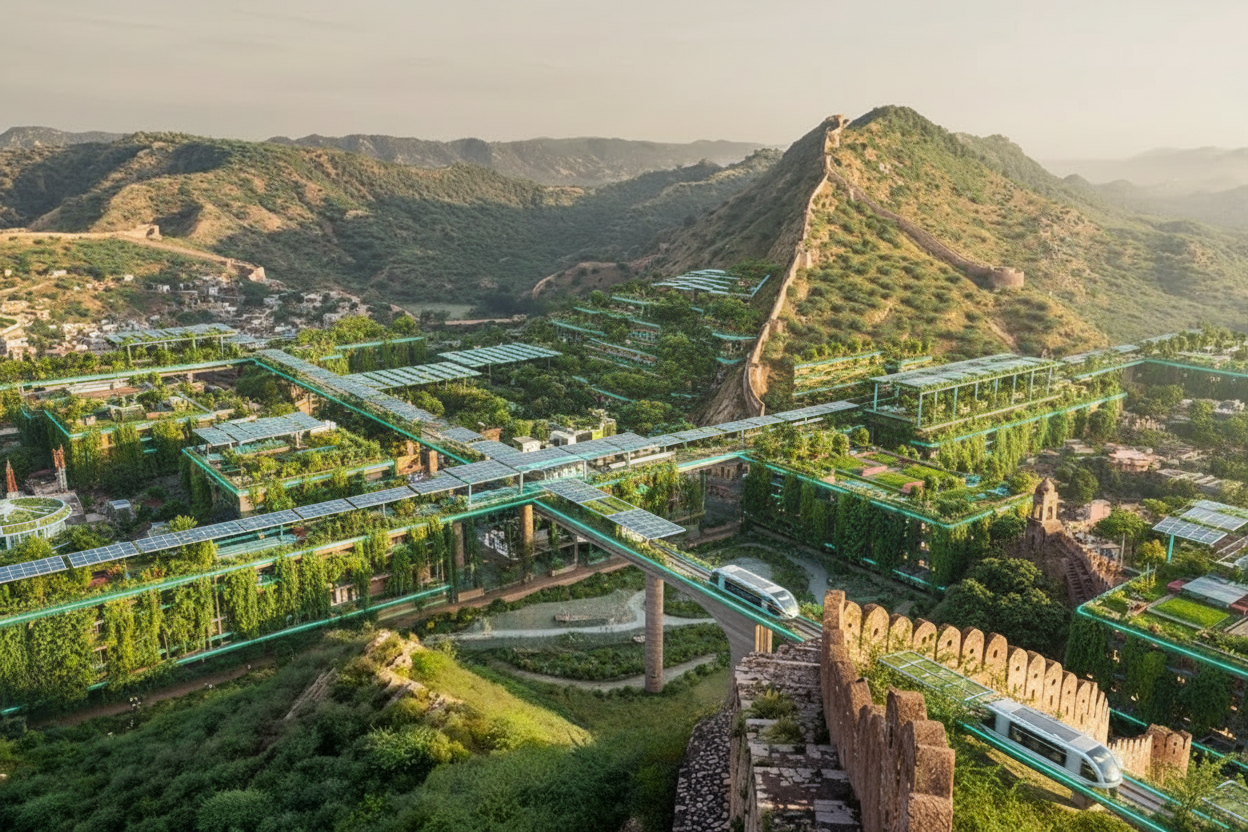 Reimagined
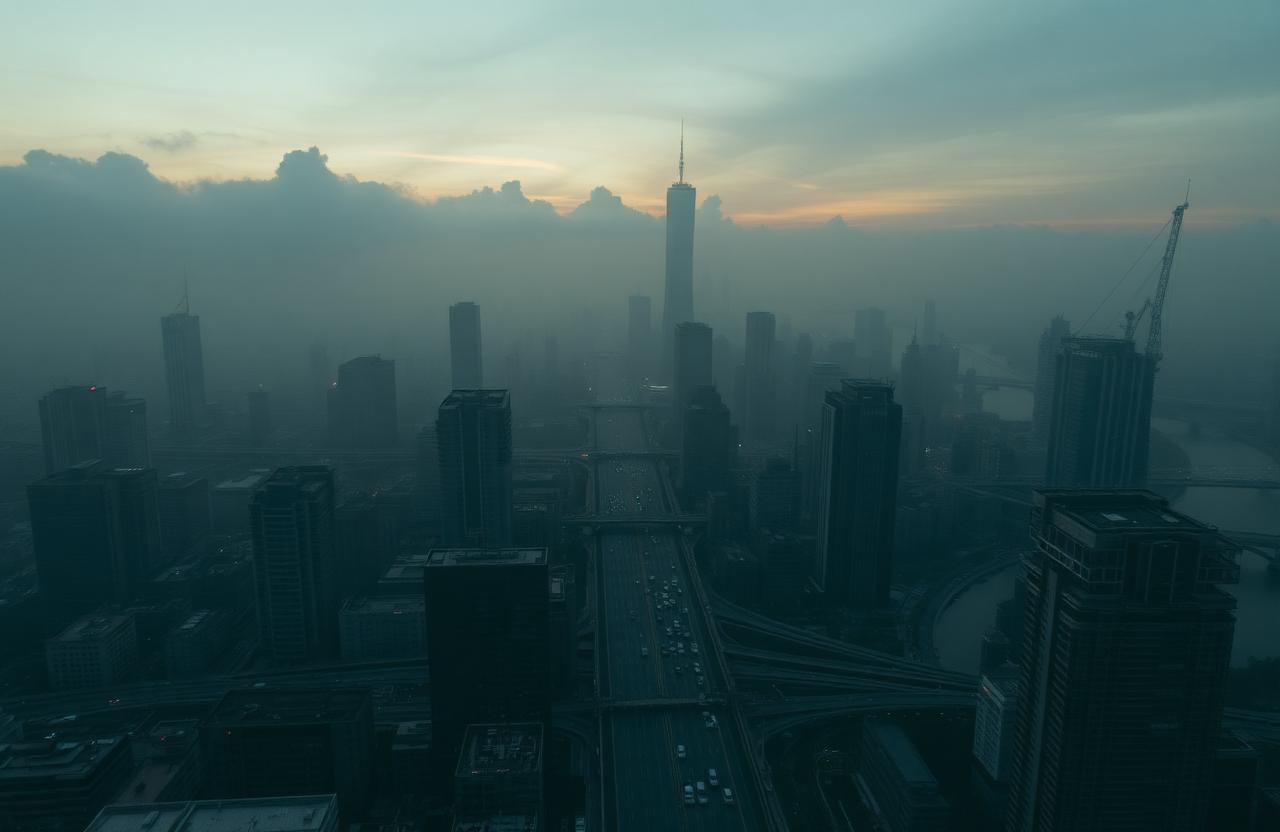 Today
TodayBy 2080, Jaipur has undergone an eco-utopia transformation, becoming a model of climate resilience and social equity. Vertical forests and bioswales absorb monsoon downpours, eliminating floods and replenishing groundwater. An integrated multimodal transport system of maglevs and autonomous electric air-taxis has replaced private vehicles, drastically cutting emissions and commute times. The city prioritizes retrofitting existing structures with passive cooling and renewable energy, ensuring equitable access to a sustainable, comfortable, and healthy urban environment for all residents, while celebrating its rich heritage amidst lush, biodiverse green spaces.
Projected impact
AI estimate, not a forecastAverage Commute Time
from 45min today
Based on 2020 urban commute data for similar Indian cities, projected 66% reduction by integrated multimodal transport systems.
PM2.5 Concentration
from 65µg/m³ today
2022 average PM2.5 for Jaipur (NCAP dashboard), 90% reduction from zero-emission transport & widespread green infrastructure.
Green Cover (canopy)
from 12% today
Estimated 2020 tree cover for Jaipur (local studies), projected 5x increase via vertical forests, parks, and bioswales.
Flood Incidents (per year)
from 8incidents today
Average number of significant urban flooding events per monsoon season (local news/studies), eliminated by sponge city infrastructure.
Traffic & Commute
Jaipur's roads are often congested with a mix of private vehicles, auto-rickshaws, and buses, leading to long commute times, significant air pollution, and traffic noise. Public transport infrastructure is insufficient to meet demand efficiently, and pedestrian/cycling networks are limited, making car dependency high.
→ A fully integrated, multi-modal transport system dominates Jaipur. High-speed maglev lines connect major hubs, supplemented by autonomous electric air-taxis for rapid, on-demand travel. An extensive network of shaded, green pedestrian and cycling paths crisscrosses the city, prioritizing active mobility. Personal vehicle ownership is obsolete, replaced by a shared fleet of electric, autonomous micro-mobility options for last-mile connectivity. Average commute times are dramatically reduced, and noise pollution is virtually eliminated.
Pollution & Air Quality
Jaipur frequently experiences poor air quality, particularly during winter months, due to vehicular emissions, industrial activity, dust from construction, and biomass burning. PM2.5 levels often exceed national and international guidelines, leading to significant public health concerns.
→ Jaipur boasts pristine air quality year-round, with PM2.5 levels consistently below WHO guidelines. The elimination of fossil fuel vehicles, the proliferation of vertical forests and green infrastructure acting as natural air filters, and the complete transition to renewable energy sources for industry and homes have eradicated urban air pollution. The air is clean, fresh, and supports a thriving urban ecosystem.
Infrastructure & Green Spaces
Jaipur's urban fabric is characterized by significant impervious surfaces, contributing to the urban heat island effect and exacerbating flood risks during monsoon seasons. Green spaces are often isolated and insufficient to mitigate environmental challenges, with a limited focus on native biodiversity. Water management relies heavily on conventional drainage systems, which are overwhelmed during heavy rains.
→ Jaipur is a verdant, sponge city. Every building facade is a living wall or vertical garden, and an interconnected network of urban forests, bioswales, rain gardens, and permeable paving covers over 70% of the city's surface. This green infrastructure effectively absorbs monsoon downpours, replenishing groundwater and completely eliminating urban flooding. The urban heat island effect is reversed, with ambient temperatures significantly cooler than the surrounding region. The city is a biodiversity hotspot, teeming with native flora and fauna, and its infrastructure is intelligently designed for adaptive reuse and near-zero waste principles.
Your turn